Soft Autumn
Soft Autumn is also an Autumn season, but leans softer and more muted rather than deeper.
 yarvia
Autumn family · 12-season color analysis
Deep Autumn (also called Dark Autumn) is the Autumn season that leans deepest: a warm undertone, with skin, hair and eyes that read deep together. Deep, warm and dark shades complete your face. Below: the full makeup palette, the shades that wash Deep Autumn out, and how it differs from the seasons closest to it.
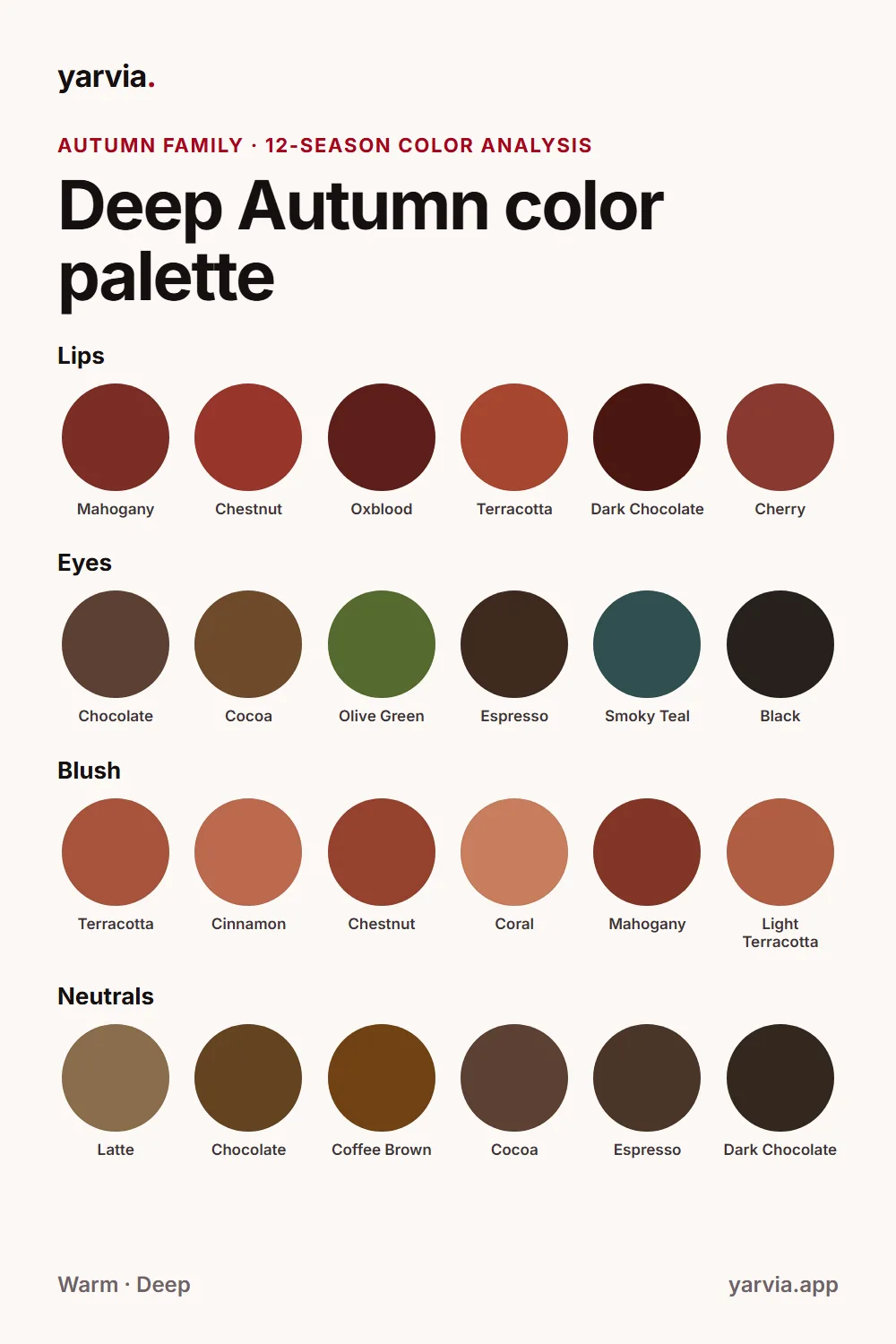
Six shades for each area, the same palette Know Me uses in the Yarvia app. Screens shift color, so treat the dots as a direction rather than an exact shade.
Lips
Eyes
Blush
Neutrals
Avoid
They come from the opposite season, Light Summer: cool instead of warm and light instead of deep.
Foundation
Warm deep undertoneBlush
Deep terracotta and bronzeLips
Burgundy, deep orange-redEyes
Chocolate, cocoa and olive greenFoundation is the one exception to the palette: match the depth to your own skin first, then lean toward the undertone the season points to.
Color analysis reads three things: warmth (your undertone), depth (how light or deep your skin, hair and eyes are together) and clarity (how vivid or muted your coloring is). Warmth and depth set the family: every Autumn season is warm and deep, with earthy, spicy, rich colors. Deep Autumn is the deepest of them: skin, hair and eyes read deep together, so it carries the darkest shades of the family.
A warm undertone looks golden or peachy rather than pink. In daylight, gold vs silver, white vs cream and vivid vs dusty fabrics held under your face show warmth and clarity; your skin, hair and eyes show depth.
Take the color analysis quiz — 9 questions, no photo — for an estimate of your season.
Soft Autumn is also an Autumn season, but leans softer and more muted rather than deeper.
True Autumn is the heart of the Autumn family: no single axis stands out, while Deep Autumn leans deeper.
Deep Winter is just as deep, but cool instead of warm: crisp, saturated, high-contrast colors rather than earthy, spicy, rich ones.
Deep, warm and dark shades complete your face. In makeup — lips: burgundy, deep orange-red; cheeks: deep terracotta and bronze; eyes: chocolate, cocoa and olive green. The full palette above has six shades for each area.
The short version: burgundy, deep orange-red. From the palette: mahogany, chestnut, oxblood, terracotta, dark chocolate and cherry.
The shades furthest from Deep Autumn sit in its opposite season, Light Summer, which is cool instead of warm and light instead of deep. In makeup, that means shades like rose pink, soft pink, pink nude and thistle; next to Deep Autumn coloring they tend to look washed out.
For Deep Autumn, Yarvia suggests: warm deep undertone. The season points to the undertone; the depth of the shade still has to match your own skin, so test it on your jawline in daylight.
Deep Autumn means your undertone leans warm and your skin, hair and eyes read deep together. The free color analysis quiz checks this in 9 questions with no photo and gives an estimate; Know Me in the Yarvia app reads your undertone, skin depth and color season from a single selfie.
Deep Winter is just as deep, but cool instead of warm: crisp, saturated, high-contrast colors rather than earthy, spicy, rich ones.
This page shows the Deep Autumn palette. Yarvia's Know Me analysis reads your undertone, skin depth and color season from a single selfie, and the makeup picks in the app follow your own palette.


Every season's lip, eye, blush and neutral shades — the same palettes Know Me uses in the Yarvia app.