True Winter
True Winter is the heart of the Winter family: no single axis stands out, while Deep Winter leans deeper.
 yarvia
Winter family · 12-season color analysis
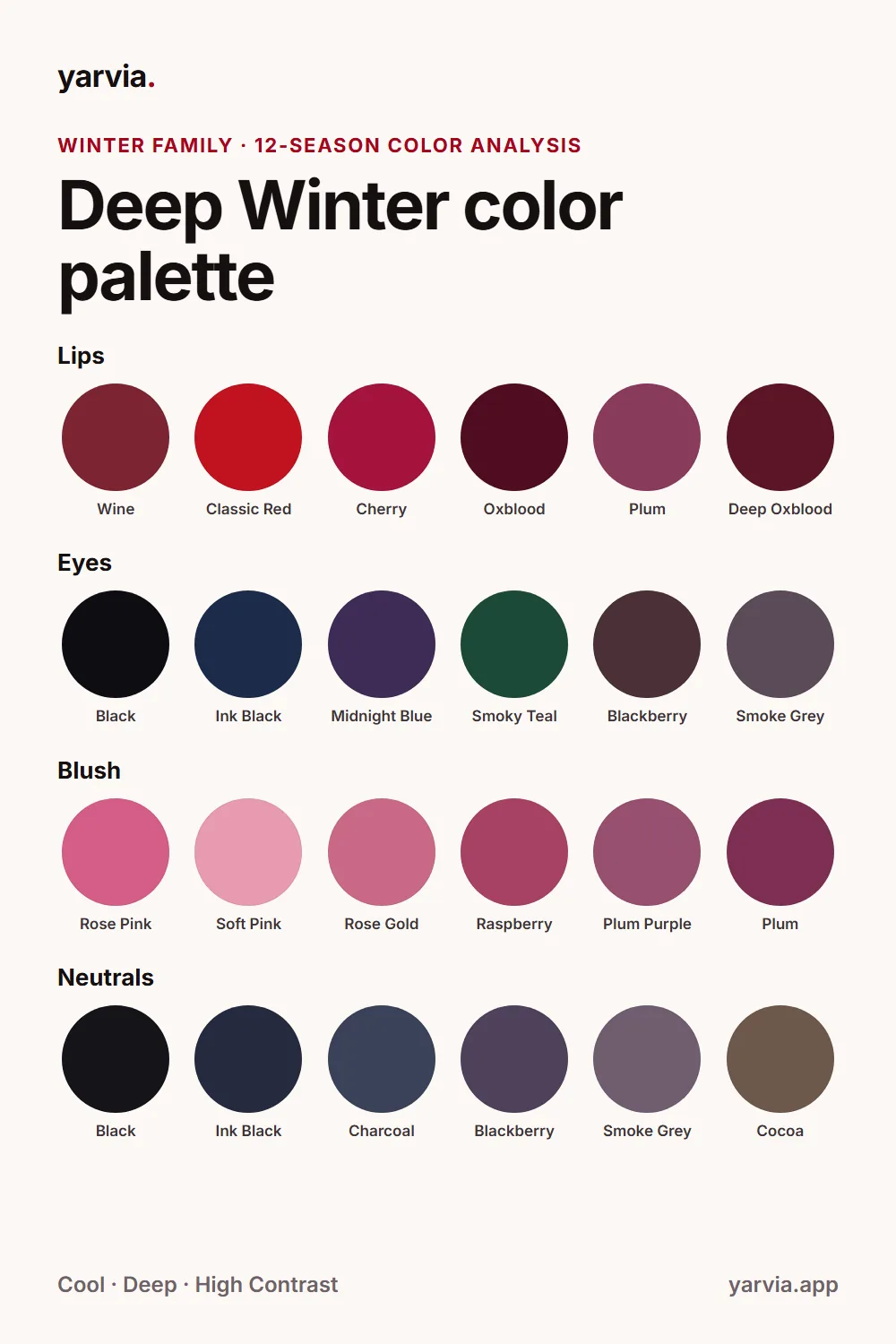
Deep Winter (also called Dark Winter) is the Winter season that leans deepest: a cool undertone, with skin, hair and eyes that read deep together. Deep, cool and crisp shades sharpen your face. Below: the full makeup palette, the shades that wash Deep Winter out, and how it differs from the seasons closest to it.
Six shades for each area, the same palette Know Me uses in the Yarvia app. Screens shift color, so treat the dots as a direction rather than an exact shade.
Lips
Eyes
Blush
Neutrals
Avoid
They come from the opposite season, Light Spring: warm instead of cool and light instead of deep.
Foundation
Cool deep undertone, full coverageBlush
Cool pink and plumLips
Burgundy, deep redEyes
Black, ink black and midnight blueFoundation is the one exception to the palette: match the depth to your own skin first, then lean toward the undertone the season points to.
Color analysis reads three things: warmth (your undertone), depth (how light or deep your skin, hair and eyes are together) and clarity (how vivid or muted your coloring is). Warmth and depth set the family: every Winter season is cool and deep, with crisp, saturated, high-contrast colors. Deep Winter is the deepest of them: skin, hair and eyes read deep together, so it carries the darkest shades of the family.
A cool undertone looks pink or bluish rather than golden. In daylight, gold vs silver, white vs cream and vivid vs dusty fabrics held under your face show warmth and clarity; your skin, hair and eyes show depth.
Take the color analysis quiz — 9 questions, no photo — for an estimate of your season.
True Winter is the heart of the Winter family: no single axis stands out, while Deep Winter leans deeper.
Bright Winter is also a Winter season, but leans clearer and more vivid rather than deeper.
Deep Autumn is just as deep, but warm instead of cool: earthy, spicy, rich colors rather than crisp, saturated, high-contrast ones.
Deep, cool and crisp shades sharpen your face. In makeup — lips: burgundy, deep red; cheeks: cool pink and plum; eyes: black, ink black and midnight blue. The full palette above has six shades for each area.
The short version: burgundy, deep red. From the palette: wine, classic red, cherry, oxblood, plum and deep oxblood.
The shades furthest from Deep Winter sit in its opposite season, Light Spring, which is warm instead of cool and light instead of deep. In makeup, that means shades like salmon, nude, pink nude and peach; next to Deep Winter coloring they tend to look washed out.
For Deep Winter, Yarvia suggests: cool deep undertone, full coverage. The season points to the undertone; the depth of the shade still has to match your own skin, so test it on your jawline in daylight.
Deep Winter means your undertone leans cool and your skin, hair and eyes read deep together. The free color analysis quiz checks this in 9 questions with no photo and gives an estimate; Know Me in the Yarvia app reads your undertone, skin depth and color season from a single selfie.
Deep Autumn is just as deep, but warm instead of cool: earthy, spicy, rich colors rather than crisp, saturated, high-contrast ones.
This page shows the Deep Winter palette. Yarvia's Know Me analysis reads your undertone, skin depth and color season from a single selfie, and the makeup picks in the app follow your own palette.


Every season's lip, eye, blush and neutral shades — the same palettes Know Me uses in the Yarvia app.